
Battlefield Report
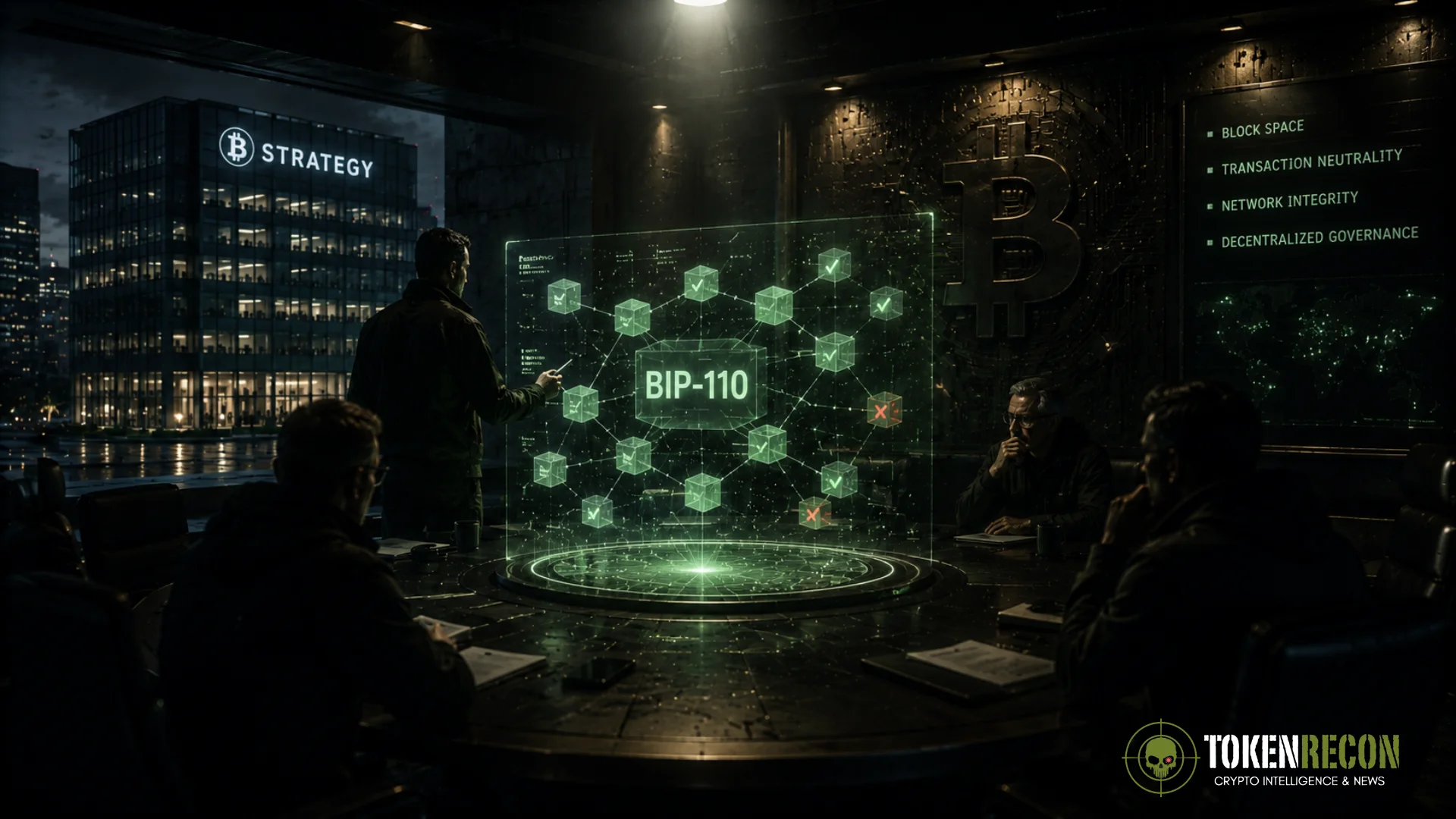
Bitcoin developers, miners, and institutional stakeholders are divided over BIP-110, a proposed soft fork that would temporarily restrict certain data-heavy transactions on the network.
Supporters argue the proposal would reduce blockchain bloat and preserve Bitcoin’s role as a monetary network. Critics believe it risks weakening Bitcoin’s long-standing principle of transaction neutrality.
Intelligence Findings
The debate intensified after Strategy Executive Chairman Michael Saylor publicly opposed the proposal, arguing that Bitcoin’s consensus rules should not distinguish between valid fee-paying transactions based on their purpose.
Many Bitcoiners I respect support BIP 110. I understand and share their desire to protect Bitcoin, but believe the proposed cure is more dangerous than the condition. Here are 110 reasons why Bitcoin needs guardians of neutrality. https://t.co/hOAqfAgC58
— Michael Saylor (@saylor) July 19, 2026
BIP-110 would limit specific non-financial data transactions for a one-year period following activation. Supporters see the measure as a way to reduce spam and improve network efficiency, while opponents warn it could establish a precedent for subjective transaction filtering.
Activation depends on miner signaling ahead of the proposed August rollout. Current support remains below the threshold required for early activation.
Threat Assessment
If adoption remains divided, the activation process could temporarily split participating nodes as enforcing clients reject blocks from non-signaling miners. While such a scenario would likely be short-lived, it highlights the governance challenges surrounding protocol upgrades.
Intelligence Assessment
BIP-110 has evolved beyond a technical proposal into a debate over Bitcoin’s long-term identity. The outcome will not only determine how the network handles block space but also shape future discussions around governance, neutrality, and protocol development as institutional participation continues to expand.