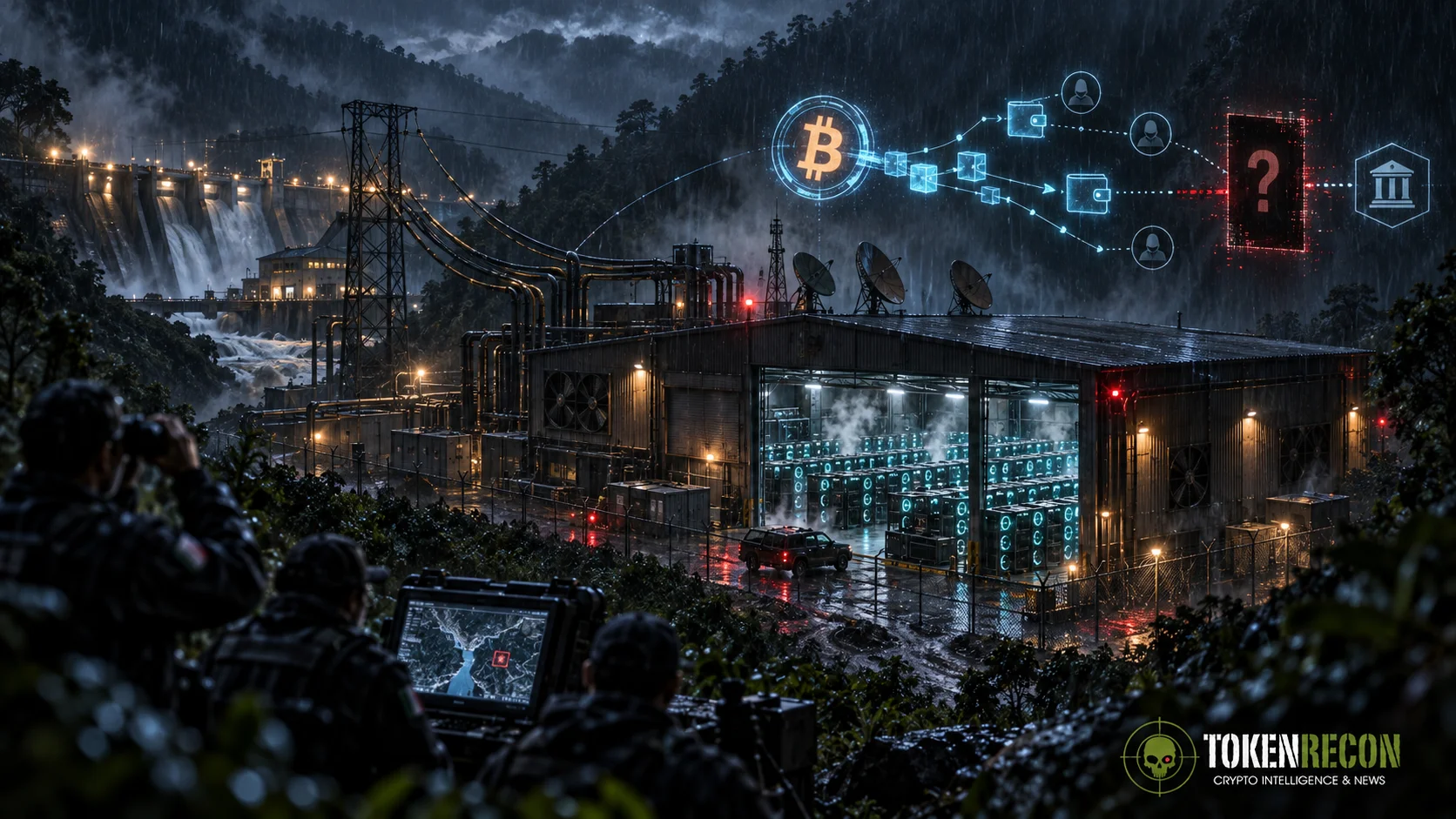

Mexican authorities are investigating a suspected illicit cryptocurrency-mining installation discovered near a hydroelectric facility in the Sierra Norte mountains of Puebla. The operation contained more than 300 graphics-processing units, 80 medium-voltage electrical terminals and eight satellite antennas, according to a Reuters investigation published September 12.
The hardware alone does not prove criminality. Cryptocurrency mining is legal in Mexico, and powerful computing equipment can be used for legitimate mining, data processing and artificial-intelligence workloads. The suspected offenses involve how the site was powered, financed and potentially used to convert illicit proceeds into digital assets.
Investigators were reportedly drawn to the location by unusual electricity consumption and mechanical noise. The site’s proximity to a hydroelectric facility has placed possible electricity theft at the center of the inquiry.
This is not an isolated discovery. Reuters reports that authorities have located four similar operations in the region since early 2025, suggesting a repeatable infrastructure model rather than one improvised installation.
The working theory is that organized-crime groups may use stolen electricity to produce cryptocurrency at a significantly reduced operating cost. Mining converts electricity, computing equipment and technical expertise into a liquid digital asset that can be moved without transporting physical cash.
That model is economically attractive when three conditions align: the equipment has already been acquired, the electricity cost is avoided and the mined asset can be transferred through wallets, exchanges or intermediaries capable of obscuring its origin.
But the cartel connection has not been conclusively established. Mexico’s federal attorney general’s office declined to discuss details while the investigation remains active, and no criminal organization has been publicly identified as controlling the Puebla site.
That distinction is critical. Suspicion based on location, power theft or sophisticated infrastructure is not the same as verified wallet attribution, beneficial ownership or proof that mined assets were used to launder drug proceeds.
Investigators will therefore need to connect physical evidence with digital evidence. Relevant intelligence could include mining-pool records, wallet addresses, exchange deposits, hardware purchase histories, satellite communications, electrical connections and payments to site operators.
The investigation also reflects a broader shift in cryptocurrency-related crime. Reuters cited Chainalysis estimates indicating that identified illicit crypto transaction volume more than doubled from approximately $59 billion in 2024 to $154 billion in 2025, with sanctions evasion accounting for a significant portion of that increase.
Illicit mining differs from ransomware, exchange theft or direct money laundering because the cryptocurrency can be newly produced rather than stolen or purchased with proceeds already identified as criminal. The digital asset begins with a clean blockchain history even if the electricity, equipment or capital used to produce it came from illegal activity.
That creates a difficult attribution problem. A block reward does not record whether the electricity powering the miner was stolen, whether the equipment was purchased with criminal proceeds or who ultimately controlled the physical facility.
Authorities still have investigative advantages. Mining operations require substantial hardware, cooling, power infrastructure and network connectivity. They also generate identifiable revenue flows through mining pools and eventual transfers to exchanges, brokers or service providers.
TOKEN RECON ASSESSMENT
The Puebla operation is not evidence that cryptocurrency mining is inherently criminal. It is evidence that organized financial crime can exploit the same infrastructure used by legitimate operators.
The most important intelligence question is whether Mexican authorities can connect the physical site to identifiable wallets, mining pools and financial beneficiaries.
Without that connection, this remains an investigation into suspected electricity theft and possible criminal financing.
With it, the case could become a blueprint for tracing criminal mining operations from power consumption to final asset liquidation.
Token Recon is watching:
- Wallets and mining pools attributed to the seized equipment
- Confirmation of how the site obtained electricity
- Hardware-purchase and equipment-import records
- Links to the other mining installations found since 2025
- Exchange or broker accounts receiving the mined assets
- Evidence establishing. or disproving organized-crime control
The larger lesson is straightforward: blockchain surveillance can follow digital assets after they are created, but it cannot independently reveal whether the physical resources used to produce them were lawful.
That boundary between the physical and digital worlds is now an active financial-crime battlefield.