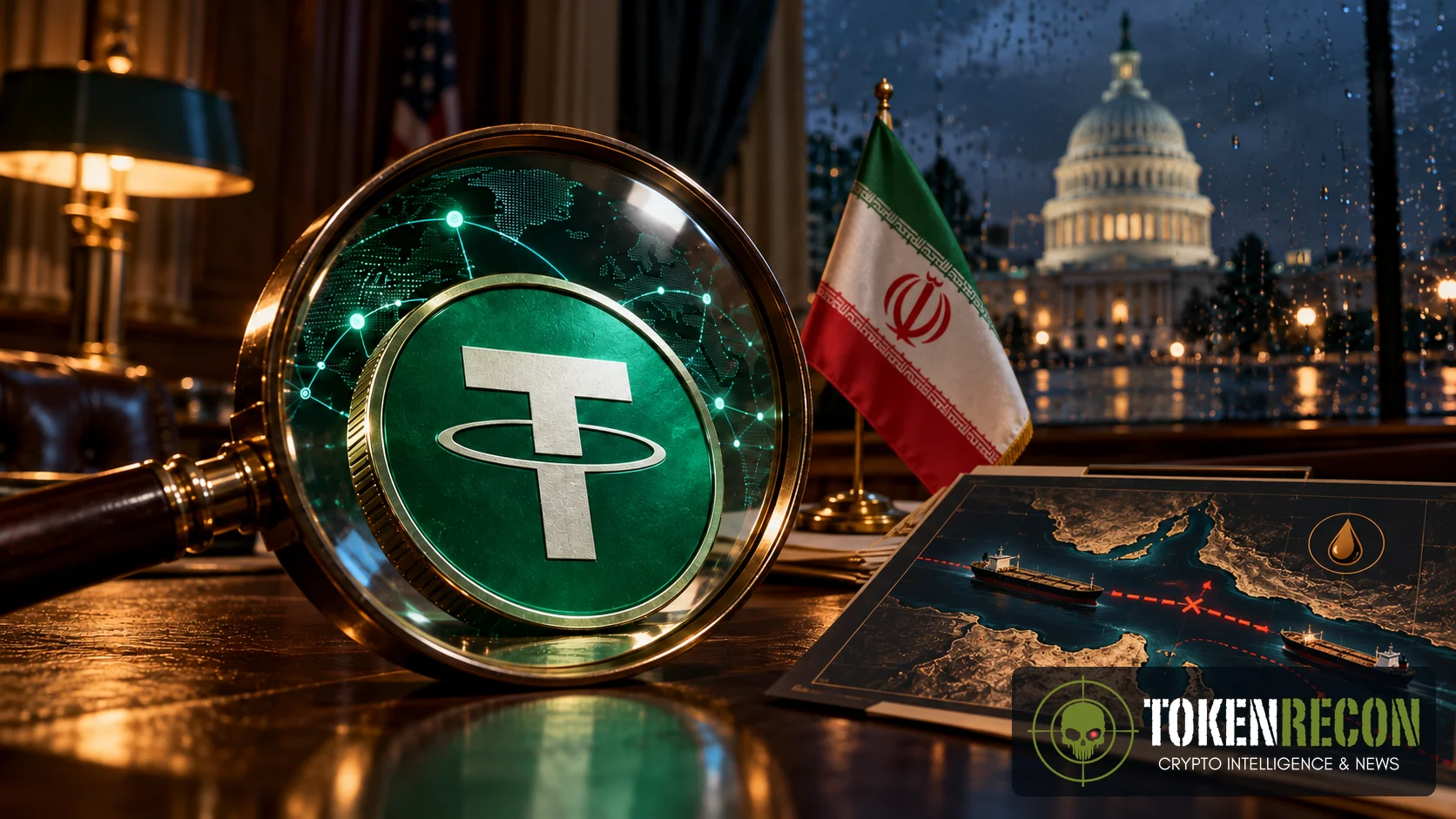

A U.S. Senate investigation placed Tether at the center of a new sanctions and illicit-finance dispute Monday.
Democratic investigators for the Senate Permanent Subcommittee on Investigations analyzed 846 cryptocurrency wallets sanctioned or targeted for seizure because of associations with Iran and regional proxies. The report says 84% of those wallets transacted exclusively or nearly exclusively in USDT. Senate Permanent Subcommittee on Investigations report announcement
Senator Richard Blumenthal, the subcommittee’s ranking member, called on the Treasury Department and Justice Department to investigate potential sanctions and banking-law violations involving Tether. Richard Blumenthal
The findings are allegations and analysis from Democratic subcommittee investigators, not a DOJ prosecution or judicial finding against Tether.
That distinction is important.
The report nevertheless carries more weight than ordinary blockchain-analysis commentary because it places the issue directly into congressional oversight and calls for federal enforcement agencies to act.
USDT’s role in dollar-denominated settlement outside conventional banking has long made it useful in markets where direct access to U.S. financial institutions is restricted. The same accessibility creates sanctions-enforcement problems when wallets connected with sanctioned entities transact through the stablecoin.
TOKEN RECON ASSESSMENT
The immediate risk is regulatory, not technical.
USDT’s underlying blockchain infrastructure has not failed. The political question is whether a centralized stablecoin issuer can satisfy U.S. sanctions expectations when its token circulates globally through permissionless networks.
The report itself does not establish a violation. A Treasury or DOJ investigation would materially change the posture from congressional scrutiny to enforcement risk.
Sources
Senator Richard Blumenthal, PSI report on Tether and Iran-linked wallets
CoinDesk, Senate investigators examine Tether’s role in Iranian shadow banking